
The evolving global economic landscape, particularly the ongoing China-US trade war, has significantly impacted trade and investment between Vietnam and China. Since mid-2018, the imposition of steep U.S. tariffs on Chinese goods has prompted many Chinese companies to diversify their markets and seek investment opportunities in neighboring regions, with Vietnam emerging as a prominent alternative.
Trade War Impacts and Vietnam’s Growing Appeal
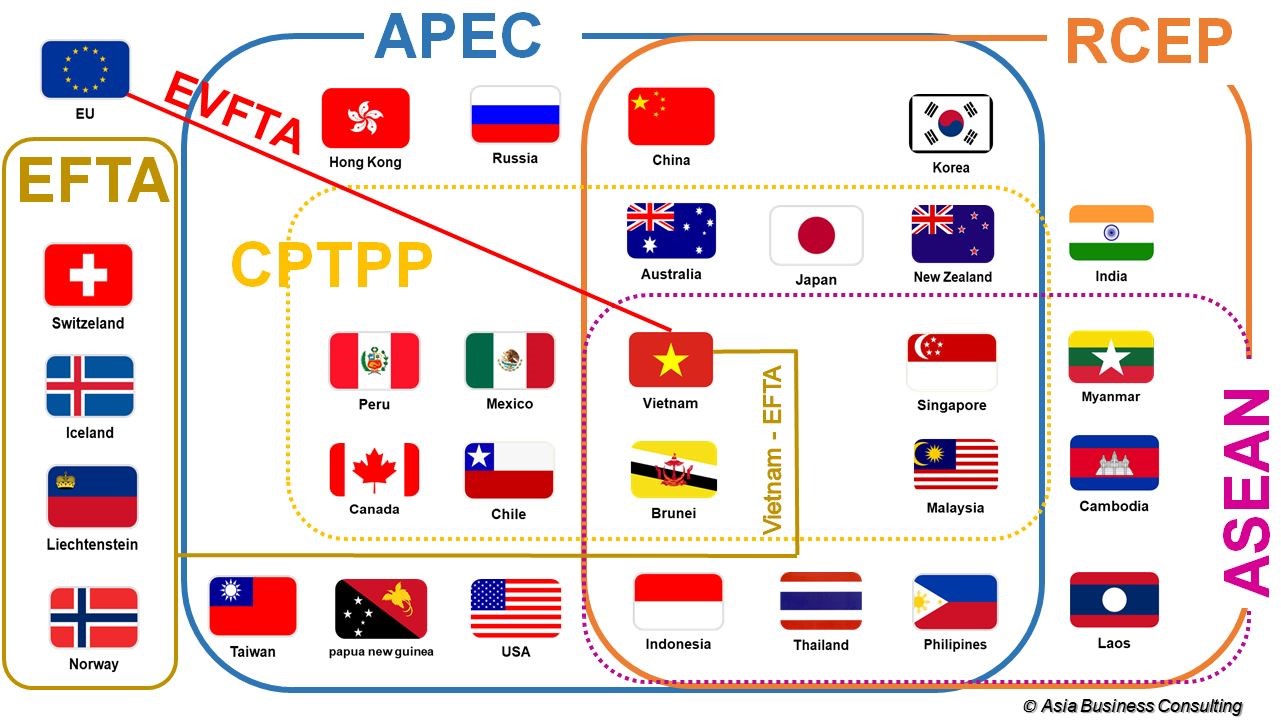
The U.S. tariffs on Chinese goods, now reaching up to 25% on a wide range of imports, have driven Chinese companies to relocate production to nearby countries to bypass these duties. Vietnam’s close proximity, with shared land and river borders, low labor and logistics costs, and 17 free trade agreements (FTAs), including the Comprehensive and Progressive Agreement for Trans-Pacific Partnership (CPTPP) and the Vietnam-EU Free Trade Agreement (EVFTA), makes it an attractive choice.
This shift has led to a substantial increase in Vietnamese imports from China, which rose by nearly 81% in the first five months of 2019, compared to a modest 2% increase in the same period in 2018. Key sectors such as electrical wires and cables saw a striking 44% increase, reversing a previous 4% decline in 2018. Additionally, products like wood, plastics, and other raw materials have also seen a surge as Chinese companies leverage the “Made in Vietnam” label to reach U.S. markets with fewer trade barriers.
Export Growth of Vietnam and China to US
This relocation trend benefits Vietnam by expanding its manufacturing capacity and enhancing its export profile. However, it also brings challenges, as the U.S. has warned Vietnam about the risks of rebranding Chinese goods to avoid tariffs, with potential sanctions looming if tariff evasion practices are identified.
New Generation FTAs: Advantages and Constraints
Vietnam’s recent participation in new-generation FTAs introduces opportunities and pressures. These FTAs promise near-zero tariffs on a wide range of goods and services, boosting Vietnam’s export market access and improving the quality of foreign investment. For example, the EVFTA is expected to attract high-caliber EU investors in key sectors, including industry, construction, and services, where EU investments are already present. However, elevated standards in these agreements—including requirements for labor rights, environmental protection, and product quality—pose barriers for some Chinese businesses accustomed to lower regulatory thresholds.
In addition, statistics from the U.S. Bureau of Statistics indicate significant shifts in Vietnam’s exports to the U.S., with certain Vietnamese products gaining ground at the expense of Chinese exports. Vietnam’s exports in categories such as phones, wood products, and footwear grew by nearly 4% and 2%, respectively, as opposed to a decline in corresponding Chinese exports.
Strategic Considerations for Vietnam’s Future
While China remains Vietnam’s largest trade partner, the volume of Chinese foreign direct investment (FDI) ranks only fourth among countries investing in Vietnam. Vietnam’s geographic proximity and favorable conditions also make it attractive to corporations from Europe, the U.S., and Japan seeking regional bases to streamline production and access the large Chinese market. For instance, Samsung’s investment in Vietnam has led to the production of phone products and components that are sold to China and other markets, with Vietnamese-made Samsung products now among the top exports from the country.
Vietnam’s role in global supply chains is expanding, with the relocation of over 50 foreign companies, including Apple and Nintendo, out of China in recent years. Many of these companies are exploring Vietnam as a manufacturing hub due to its trade-friendly environment, growing FDI, and compliance with the high standards of new-generation FTAs.
Vietnam stands at a pivotal point: balancing the influx of Chinese FDI with compliance to international standards will be crucial to fostering sustainable economic growth. This dual strategy—optimizing FDI opportunities from both China and global partners while aligning with FTA standards—can enhance Vietnam’s export competitiveness, bolster its economic resilience, and position it strategically within the Asia-Pacific.
By maximizing its trade agreements and managing the risks tied to shifting trade dynamics, Vietnam can solidify its position as a regional economic hub, achieving steady growth and increasing its influence in the global market.